Introducing uLite: How Small Business Operations Are Changing, And Why POS Alone is No Longer Enough

For small businesses, technology should make daily operations easier. But in many cases, the tools they rely on were built for an earlier stage of commerce, when transactions happened at a fixed counter, orders followed a more predictable flow, and customer expectations were lower.
That is no longer the environment most businesses operate in today.
Restaurants are balancing dine in, pickup, and phone orders at the same time. Service businesses are expected to take payments on the spot. Quick service shops need to move faster during rush periods without adding friction at checkout. Across industries, small businesses are being asked to do more with leaner teams and less room for operational inefficiency.
This shift is changing what businesses need from their POS systems. It is also creating space for newer tools like uLite, which is designed around today’s operating reality rather than yesterday’s setup.
Part 1: Why Traditional POS Systems Often Fall Short for Modern Small Businesses
A traditional POS system was primarily designed to complete a transaction. In many cases, that meant a fixed terminal, a predefined checkout flow, and hardware that stayed in one place.
That model still works in some environments, but it becomes limiting when a business needs more flexibility.
The core challenge: operations are no longer fixed
Modern small businesses often operate in ways that are more dynamic than traditional POS systems were built to support. A restaurant may need to take orders quickly, manage modifiers, and keep lines moving during peak hours. A mobile business may need to accept payment wherever the service is delivered. A pop up vendor may need to get started quickly without investing in a full counter setup.
In these situations, the problem is not simply “processing payments.” The larger issue is whether the system fits the way the business actually runs.
Common pain points businesses experience
When the POS does not match the workflow, several operational problems tend to appear.
Limited mobility
Many systems are still tied to a fixed station, which makes them less useful for businesses that operate across tables, locations, or service environments.
Slow setup and heavy hardware requirements
Some systems require multiple devices, complicated installation, or a longer onboarding process than a small business can realistically afford.
Too much friction during checkout
If staff have to click through too many steps, manually add notes, or work around a rigid interface, service slows down and mistakes become more likely.
Feature overload without practical usability
Some platforms offer many functions on paper, but that does not always translate into a smoother daily experience for staff.
Part 2: What Businesses Are Starting to Need Instead
As operating models evolve, the expectation for POS is changing too.
Businesses increasingly need systems that are:
faster to learn
easier to deploy
flexible enough to move with the business
simple enough to support real daily workflows
In other words, the market is moving from fixed POS infrastructure toward lighter, more mobile, more adaptable tools.
This is where mobile first POS solutions have become more relevant.
Part 3: Where uLite Fits In
uLite was built around this operational shift.
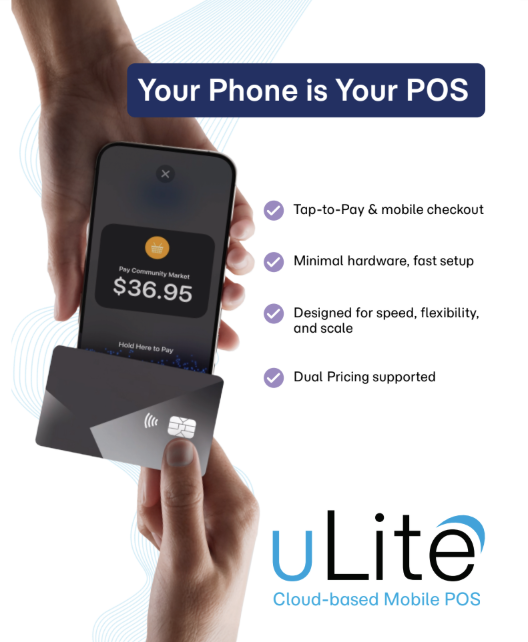
Instead of assuming every business works from a traditional counter, uLite is designed for businesses that need speed, mobility, and a lower-friction way to manage transactions. It turns a phone or tablet into a POS experience that is easier to deploy and easier to use in the real world.
From an educational perspective, what makes this type of solution important is not just the technology itself. It is the fact that it aligns more closely with how many small businesses now operate.
How uLite addresses common operational pain points
It reduces hardware dependency
Because uLite works on mobile devices, businesses are not forced into a heavier setup just to start taking payments or entering orders.
It simplifies the transaction experience
Just one download. No complex setup or multiple systems required.
It gives businesses more flexibility in where transactions happen
Instead of forcing the customer interaction back to a fixed counter, the system can move with the business.
Practical use cases for uLite
This type of POS model is especially useful in environments where mobility and speed directly affect operations.
Quick service restaurants and beverage shops
Milk tea shops, coffee counters, and fast-casual restaurants operate in high-volume environments where speed matters. Orders are coming in nonstop, customers expect speed, and staff need to move quickly without tapping through multiple screens.
Food trucks and mobile vendors
For food trucks, street vendors, and festival booths, there’s no fixed counter. You need to take orders and payments wherever the customer is—without carrying bulky equipment.
On-site service businesses
For professionals like home service providers, technicians, or contractors, payments often happen at the job site. Instead of following up later or redirecting customers, transactions can be completed on the spot.
Pop-ups and small retail setups
For pop-up stores, market vendors, or small-format retail, setup time and space are limited. A lighter POS makes it easy to start selling immediately without building a full checkout station.

A Smarter Way Forward
The real takeaway is not just that businesses need a new POS, it is that small business tools now need to support the full flow of operations, not just isolated tasks.
For many businesses, that means moving toward systems that:
reduce unnecessary hardware and setup burden
support faster transactions
fit real workflows more naturally
improve accuracy upstream, before payment even happens
uLite is built around this shift. It addresses the need for a faster, more flexible POS experience; one that adapts to how businesses actually operate, rather than forcing businesses to adapt to the system.
Together, this reflects a broader evolution in small business technology: moving away from rigid, fixed systems toward solutions that are more flexible, streamlined, and aligned with real operations.
Get Started with Our Beta Program
uLite is currently available through a limited beta program, with free software offered to selected businesses.
If you are looking to streamline operations and reduce manual workload, now is the time to explore a better approach.
Visit Universal Processing at https://letsgoup.com/ or call 888.885.8358 to speak with our team and find the right solution for your business.


留言